

TL;DR:
- An SEO agency improves a website’s organic search visibility through technical optimization, content, and link building. In 2026, they also focus on AI search visibility and connecting activities to business outcomes. Long-term collaboration, transparency, and ethical practices are key to successful SEO partnerships.
An SEO agency is a specialist firm that improves a website’s visibility in organic search results through technical optimisation, content strategy, and authority building. The industry term is “search engine optimisation agency,” and its core purpose is to connect organisations with people actively searching for their services, without relying on paid advertising. In 2026, that scope has expanded to include AI search visibility, as tools like Google’s AI Overviews and other AI-driven search interfaces now influence how buyers find information. Understanding what an SEO agency does, and when to engage one, helps organisations make considered decisions about their digital presence.
What does an SEO agency do?
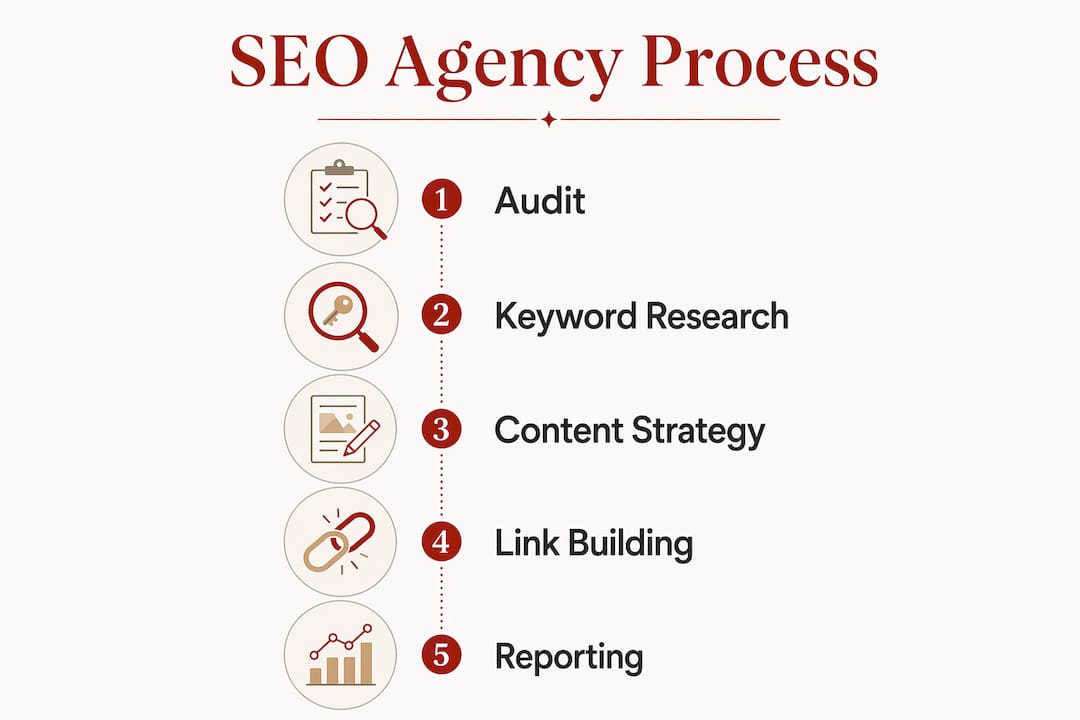
An SEO agency delivers a set of interconnected services that work together to improve where a website appears in search results. No single activity produces results in isolation. The work spans technical infrastructure, content, and off-site credibility.

Technical SEO
Technical SEO addresses the foundations that allow search engines to find, read, and rank a website. This includes site speed, crawlability, structured data markup, and Google Core Web Vitals. Core Web Vitals are Google’s standardised metrics for measuring page experience, covering loading speed, interactivity, and visual stability. Agencies audit these factors and produce prioritised recommendations for developers or implement fixes directly.
Keyword research and content strategy
Keyword research identifies the specific terms and questions that a target audience uses when searching. Agencies assess search volume, competition, and commercial intent to prioritise topics that align with business goals. Content strategy then maps those topics to pages, articles, or resources that answer genuine queries. The aim is to attract visitors who are already looking for what the organisation offers.
Authority building
Link building requires relationships, outreach infrastructure, and editorial judgement that most in-house teams cannot sustain. Agencies manage digital PR campaigns, editorial outreach, and content partnerships to earn links from credible external sites. These links signal to search engines that a site is trustworthy and relevant. The process is slow and requires consistent effort over months.
Reporting and AI search visibility
SEO agencies produce roadmaps, reports, and dashboards that connect organic activity to business outcomes such as leads, enquiries, and revenue. Reporting focused only on keyword rankings misses the point. In 2026, agencies also monitor AI search presence across platforms like Google’s AI Overviews, tracking whether a brand appears in AI-generated answers that now sit above traditional results.
Pro Tip: Ask any prospective agency to show you a sample report. If it shows only rankings and traffic without connecting to leads or revenue, treat that as a warning sign.
How has the SEO agency role changed in 2026?
The most significant shift is conceptual. Treating SEO as a product rather than an ongoing programme is the most common reason organisations see poor returns. A one-off website audit or a three-month engagement rarely produces lasting results. Search engines update their algorithms continuously, competitors publish new content, and technical debt accumulates. Effective SEO requires a recurring investment, not a single setup.
“The biggest misconception is treating SEO as a product. SEO agencies today are credibility-building partners integral to strategic growth.”
Agencies have also moved away from ranking-chasing as a primary measure of success. Rankings fluctuate daily and vary by location, device, and user history. The more meaningful measure is whether organic search generates qualified leads and supports revenue growth. Transparent reporting linked to real business outcomes is now the standard expectation for any credible agency relationship.
The risks of opaque, automated tactics have also become clearer. Agencies that promise specific ranking positions or claim proprietary methods that cannot be explained openly are often relying on techniques that violate Google’s guidelines. These approaches can produce short-term gains followed by significant penalties. Organisations with reputations to protect should avoid them entirely.
Pro Tip: Request a plain-language explanation of the agency’s link-building approach before signing a contract. Ethical outreach takes longer but does not put your domain at risk.
AI search optimisation is now a standard part of the agency brief. Tracking AI-influenced visibility is a deliverable that separates agencies keeping pace with the market from those still working to a 2019 playbook.
When should a business hire an SEO agency?
The decision to engage an SEO agency depends on several factors. Working through them in order helps avoid a mismatch between budget, expectations, and what an agency can realistically deliver.
-
Assess organic search as a growth channel. If your organisation relies on word of mouth, referrals, or paid advertising for most of its leads, SEO may be a secondary priority. If organic search is already generating traffic and you want to grow it, an agency adds clear value.
-
Review your monthly budget honestly. Businesses spending under £2,000 per month on SEO are often better served by a one-time technical audit and a targeted content investment than by a retained agency contract. A retainer at that level rarely covers the technical, content, and outreach work needed to move the needle.
-
Consider your market’s competitiveness. Organisations in highly competitive sectors, such as professional services, healthcare, or education, face more established competitors in search results. An agency with sector experience can identify gaps and build authority more efficiently than a generalist approach.
-
Evaluate your in-house capacity. A small internal marketing team can benefit from an agency handling technical SEO and link building while they manage content. Larger organisations sometimes hire in-house SEO specialists and use agencies for specific projects or audits.
-
Clarify your timeline expectations. SEO produces compounding returns over 6–12 months, not immediate results. Organisations that need leads within 30 days are better served by paid search while SEO builds in the background.
For mission-driven organisations, the ethical guidance for nonprofits around choosing an SEO service provider is worth reviewing before committing to any contract.
What are the benefits of working with an SEO agency?
The practical advantages of engaging a quality agency are concrete and measurable over time.
- Immediate access to specialist expertise. Hiring a full SEO team in-house can take months and requires significant recruitment investment. An agency provides a team with established processes from the first week of engagement.
- Focus on core operations. Organisations that hand SEO to an agency free their internal teams to concentrate on their primary work. This is particularly relevant for smaller organisations where staff carry multiple responsibilities.
- Long-term visibility growth. Organic search traffic compounds over time. Pages that rank well continue to generate leads without ongoing advertising spend. This makes SEO one of the more cost-efficient channels over a three to five year horizon.
- Alignment with business goals. A well-run agency connects its activities to the organisation’s KPIs, whether those are enquiry volumes, event registrations, or product sales. This alignment keeps the work grounded in outcomes rather than activity.
- Ethical and sustainable practices. Effective SEO partnerships align agency activities with the client’s mission and values. For organisations in high-trust sectors, this matters. Tactics that inflate short-term rankings at the cost of credibility are a liability, not an asset.
The value of measuring SEO performance lies in connecting organic activity to business outcomes over time. Organisations that track this consistently make better decisions about where to invest their digital budgets.
Key takeaways
An SEO agency is most valuable when treated as a long-term strategic partner, not a short-term service provider.
| Point | Details |
|---|---|
| Core agency services | Technical SEO, keyword research, content strategy, link building, and reporting form the standard brief. |
| Budget threshold | Organisations spending under £2,000 per month often gain more from a one-time audit than a retained contract. |
| Evolved role in 2026 | Agencies now track AI search visibility alongside traditional rankings as a standard deliverable. |
| Reporting standard | Credible agencies connect organic activity to leads and revenue, not just keyword positions. |
| Ethical practices matter | Sustainable, transparent methods protect organisational reputation and produce durable results. |
Choosing an SEO agency: what I’ve learned from working in this space
The organisations that get the most from an SEO agency are the ones that treat it as a working relationship rather than a procurement exercise. They share business goals openly, ask questions about methodology, and review reports with genuine curiosity rather than just checking a box.
The most common disappointment I see comes from misaligned expectations at the start. An organisation signs a contract expecting to rank on page one within two months. The agency delivers solid foundational work. The client sees no dramatic change and loses confidence. Neither party communicated clearly about what the first six months would actually look like.
The second pattern worth naming is the attraction to agencies that promise certainty. No agency can guarantee a specific ranking. Search engines do not work that way. An agency that promises otherwise is either misinformed or not being straight with you. The right question to ask is not “can you get us to position one?” but “how do you measure whether this is working?”
For purpose-driven organisations in particular, the fit between an agency’s values and your own matters more than it might seem. An agency that understands sustainable SEO practices and the governance expectations of high-trust sectors will make better decisions on your behalf, especially when shortcuts are tempting.
SEO done well is slow, methodical, and unglamorous. It is also one of the most durable ways to build an online presence that serves an organisation for years.
— Ben
Com’s approach to SEO for mission-driven organisations
Com works with purpose-driven organisations that want their online presence to reflect their values, not just their budget. The team combines AI-informed search visibility with ethical digital marketing to build organic growth that holds up over time.
For organisations that want SEO built on transparency, sustainability, and genuine alignment with their mission, Com’s AI-informed SEO services offer a considered alternative to high-volume, low-accountability agency models. The focus is on long-term visibility, not short-term metrics that look good in a report but do not translate to real outcomes.
FAQ
What is an SEO agency in simple terms?
An SEO agency is a specialist firm that improves a website’s position in organic search results through technical work, content, and link building. Its goal is to attract relevant visitors without paid advertising.
How does an SEO agency work?
An agency audits a website’s technical health, researches relevant search terms, produces or guides content, and builds external links to increase credibility with search engines. Progress is tracked through regular reporting tied to business outcomes.
What do SEO agencies charge?
Pricing varies by scope and market. Organisations with budgets under £2,000 per month are often better served by a one-time audit and targeted content work than a full retainer, as smaller budgets rarely cover the full range of services needed.
How long does SEO take to show results?
SEO typically produces measurable results within 6–12 months of consistent work. Competitive markets and sites with significant technical issues may take longer to show meaningful movement in organic traffic and leads.
What should I look for when choosing an SEO agency?
Look for transparent reporting connected to business KPIs, a clear explanation of link-building methods, and evidence of work in your sector. Avoid agencies that promise specific rankings or cannot explain their methodology in plain language.


