

TL;DR:
- A business website is a strategic asset that must align features with clear objectives, prioritizing security, accessibility, and sustainability. Key features include mobile responsiveness, fast load times, trust signals, and ongoing governance practices to maintain high performance and trust. Focusing on purposeful design and regular audits ensures the site effectively supports organizational goals over time.
A business website is a strategic asset, not simply a digital address. Yet many organisations add features reactively, following trends rather than objectives. The result is sites that look busy but fail to convert, inform, or build trust. This article presents a considered business website features list for business owners and marketing professionals who want to make deliberate decisions. Each feature is assessed against governance, accessibility, sustainability, and digital risk. The goal is clarity on what truly matters for high-performing, high-trust sites.
Table of Contents
- Key takeaways
- 1. Mobile-responsive design
- 2. Clear, standard navigation
- 3. Fast page load times
- 4. Accessibility features
- 5. HTTPS and SSL certification
- 6. Web Application Firewall and DDoS protection
- 7. Clear messaging and calls to action
- 8. Trust signals and social proof
- 9. SEO foundations: metadata, structured data, and sitemaps
- 10. Content Delivery Network integration
- 11. Privacy-respecting analytics
- My perspective on what actually matters
- How Com can help
- FAQ
Key takeaways
| Point | Details |
|---|---|
| Align features to objectives | Every feature should serve a defined business goal, not simply follow current trends. |
| Mobile optimisation is baseline | Over 70% of global traffic is mobile; responsive design is non-negotiable in 2026. |
| Security must be layered | SSL, WAF, and regular audits together reduce exploitable gaps and protect visitor trust. |
| Trust signals convert visitors | Concrete proof such as client logos and case studies outperforms claims alone. |
| Sustainable design supports values | Balancing performance with ecological impact aligns with high-trust organisational stewardship. |
1. Mobile-responsive design
Over 70% of global web traffic originates from mobile devices. For any organisation operating in 2026, a site that does not adapt to screen size is not a minor inconvenience. It is a functional failure.
Mobile-responsive design means the layout, text, and images reformat automatically to suit the device. This is not the same as having a separate mobile version of a site. A single, flexible codebase is the standard. It reduces maintenance burden and keeps the user experience consistent.
For community-based organisations in Australia, the responsive design principles covering mobile optimisation and accessibility best practises offer practical, locally relevant guidance worth reviewing.
Pro Tip: Test your site on actual devices, not just browser emulators. The experience on a low-cost Android handset often differs significantly from what Chrome DevTools shows.
2. Clear, standard navigation
Navigation is not a place for creativity. Standard labels improve findability because they align with what users already expect. Labels such as “About”, “Services”, “Contact”, and “Blog” work because they match the mental models visitors bring to every site they visit.
Creative navigation, where organisations rename sections with internal jargon or brand-specific terms, consistently increases bounce rates. Visitors scan rather than read. If they cannot locate what they need within a few seconds, they leave.
Practical standards for navigation:
- Limit top-level menu items to five or seven
- Use plain descriptive labels, not marketing language
- Include a visible search bar for content-rich sites
- Keep the mobile menu accessible by touch, with adequate tap target sizes
3. Fast page load times
Target page speed is under 2.5 seconds on mobile. Beyond this threshold, conversion rates decline and search rankings suffer. Google’s Core Web Vitals assessments treat speed as a ranking signal, not a recommendation.

Common causes of slow load times include unoptimised images, excessive third-party scripts, and poor hosting infrastructure. Each of these is solvable without redesigning the entire site.
Organisations should audit load times quarterly rather than once at launch. Site weight tends to grow over time as content, plugins, and integrations accumulate without anyone systematically reviewing the impact.
4. Accessibility features
Accessibility is both a legal and ethical standard. In Australia, the Web Content Accessibility Guidelines (WCAG) 2.1 at Level AA are referenced in federal accessibility requirements. Failure to meet these standards excludes users with disabilities and creates reputational and legal risk.
Core accessibility features every business site should include:
- Sufficient colour contrast between text and background
- Descriptive alt text on all images
- Keyboard-navigable interface for users who cannot use a mouse
- Correctly structured headings to support screen readers
- Captions on video content
Accessibility and performance are not in conflict. Accessible markup tends to be cleaner, lighter, and easier for search engines to index. Getting this right early is considerably less costly than retrofitting it later.
5. HTTPS and SSL certification
Data breach resolution for UK small businesses averages £8,460. The Australian context is comparable. HTTPS with a valid SSL certificate is the minimum entry point for any business site that handles contact forms, account logins, or payment data.
Beyond cost, absence of HTTPS triggers browser warnings that visibly flag sites as “Not Secure.” This alone will deter visitors before they read a single word of content.
SSL certificates are generally low cost or included with quality hosting. The more important decision is selecting a Certificate Authority with reliable automated renewal, so certificates do not lapse unnoticed.
6. Web Application Firewall and DDoS protection
A Web Application Firewall filters incoming requests and blocks common attack vectors including SQL injection and cross-site scripting. WAF protects against SQL injection and XSS attacks by examining traffic before it reaches the server, reducing the attack surface significantly.
DDoS protection works alongside a WAF to absorb traffic floods that would otherwise take a site offline. For organisations using shared hosting without additional controls, neither protection is typically active by default. This is a significant and underappreciated risk.
The Cyber Essentials framework provides a useful baseline structure. Its core controls include boundary firewalls and patch management practices that apply directly to website security governance.
| Security feature | Primary protection | Default on shared hosting |
|---|---|---|
| SSL certificate | Data in transit | Sometimes included |
| Web Application Firewall | Injection and scripting attacks | Rarely included |
| DDoS protection | Traffic flood attacks | Not typically included |
| Malware scanning | Infected files and code | Inconsistent |
| Multi-factor authentication | Unauthorised admin access | Opt-in only |
7. Clear messaging and calls to action
Visitors scan sites quickly. They expect immediate answers to three questions: who you are, what you do, and why it is relevant to them. Messaging that buries these answers below elaborate introductions loses most visitors before the scroll begins.
Effective calls to action are specific and tied to a single objective per page. A services page might direct visitors to book a consultation. A blog post might invite newsletter sign-up. Giving every page one primary action reduces decision fatigue and improves conversion rates.
Pro Tip: Read your homepage heading aloud to someone unfamiliar with your organisation. If they cannot explain what you do after hearing it, the messaging needs revision.
8. Trust signals and social proof
A website’s credibility relies on tangible proof, not assertions. Client logos, independently verified testimonials, case studies with measurable outcomes, and relevant certifications each serve a different trust function.
Client logos signal that known or respected organisations have chosen to work with you. Case studies show specific results. Certifications demonstrate that external bodies have assessed and validated your practise. Together, these reduce perceived risk for prospective clients who are evaluating multiple providers.
The placement of trust signals matters as much as their presence. Position them near decision points: close to contact forms, on pricing pages, and at the end of service descriptions. Visitors should encounter proof at the precise moment they are deciding whether to act.
9. SEO foundations: metadata, structured data, and sitemaps
SEO is not a separate discipline from web design. It is built into a site’s structure from the beginning or it is retrofitted at significantly greater cost. The key components for business websites include properly formatted page titles, meta descriptions, structured data markup, and an XML sitemap submitted to search consoles.
Structured data, often implemented using schema.org vocabulary, helps search engines understand page content contextually. For organisations offering services, events, or FAQs, the right schema can generate rich results in search pages and improve click-through rates without additional advertising spend.
Sustainable web design principles align well with SEO performance. Clean code, minimal dependencies, and efficient page structures benefit both ecological impact and crawl efficiency.
10. Content Delivery Network integration
CDNs distribute load geographically and add a security layer that reduces exposure to DDoS attacks. For organisations with audiences in multiple locations, a CDN also reduces latency by serving content from servers geographically closer to each visitor.
| Feature | With CDN | Without CDN |
|---|---|---|
| Page load time (remote users) | Significantly faster | Dependent on single server location |
| DDoS resilience | Substantially improved | Limited to hosting provider defaults |
| Availability during traffic spikes | High | Variable |
| Cost at entry level | Low to moderate | Not applicable |
CDNs are not exclusively for large enterprises. Many CDN services offer entry-level plans suited to small and mid-size organisations. The performance and security benefits are available well before significant traffic volumes are reached.
11. Privacy-respecting analytics
Analytics are necessary for tracking whether a site achieves its objectives. They are also a governance consideration. Collecting more data than necessary, particularly without clear user consent, creates compliance risk under Australia’s Privacy Act and comparable international frameworks.
Privacy-respecting analytics tools allow organisations to measure traffic, page performance, and user behaviour without building invasive profiles or relying on third-party cookies. Some tools store data within a single jurisdiction, which may be relevant for organisations with data sovereignty obligations.
The key metrics to track are simple: pages visited, time on site, conversion events, and traffic sources. An overloaded analytics dashboard rarely improves decisions. A focused set of KPIs reviewed regularly is considerably more useful.
My perspective on what actually matters
I’ve worked with enough high-trust organisations to know that the sites which perform best are rarely the most feature-rich. They are the most considered.
What I’ve seen consistently is that feature overload is often a symptom of unclear strategy. When an organisation is uncertain about what the site should do, it adds features as a substitute for direction. The result is a site that does many things adequately and nothing well.
The organisations whose sites I respect most have done the harder work first: defining a clear purpose, mapping visitor journeys, and selecting only the features that serve both. Accessibility and sustainability are not concessions in that process. They are conditions of good design, not constraints on it.
In my experience, governance is also where most sites quietly fail. Security audits happen once at launch and never again. Analytics are set up and never reviewed. The sites that maintain trust over time treat these as ongoing practises, not one-time tasks. That discipline is less visible than a striking visual design, but it is what actually protects an organisation’s reputation online.
— Ben
How Com can help
Com works with purpose-driven organisations across Australia to build websites that are grounded in clear objectives, ethical design, and lasting performance. If this business website features list has surfaced gaps in your current site, Com’s approach to sustainable website design and AI-informed SEO addresses exactly these priorities. From accessibility audits to technical SEO integration, the work is aligned to your values and your audience’s needs.
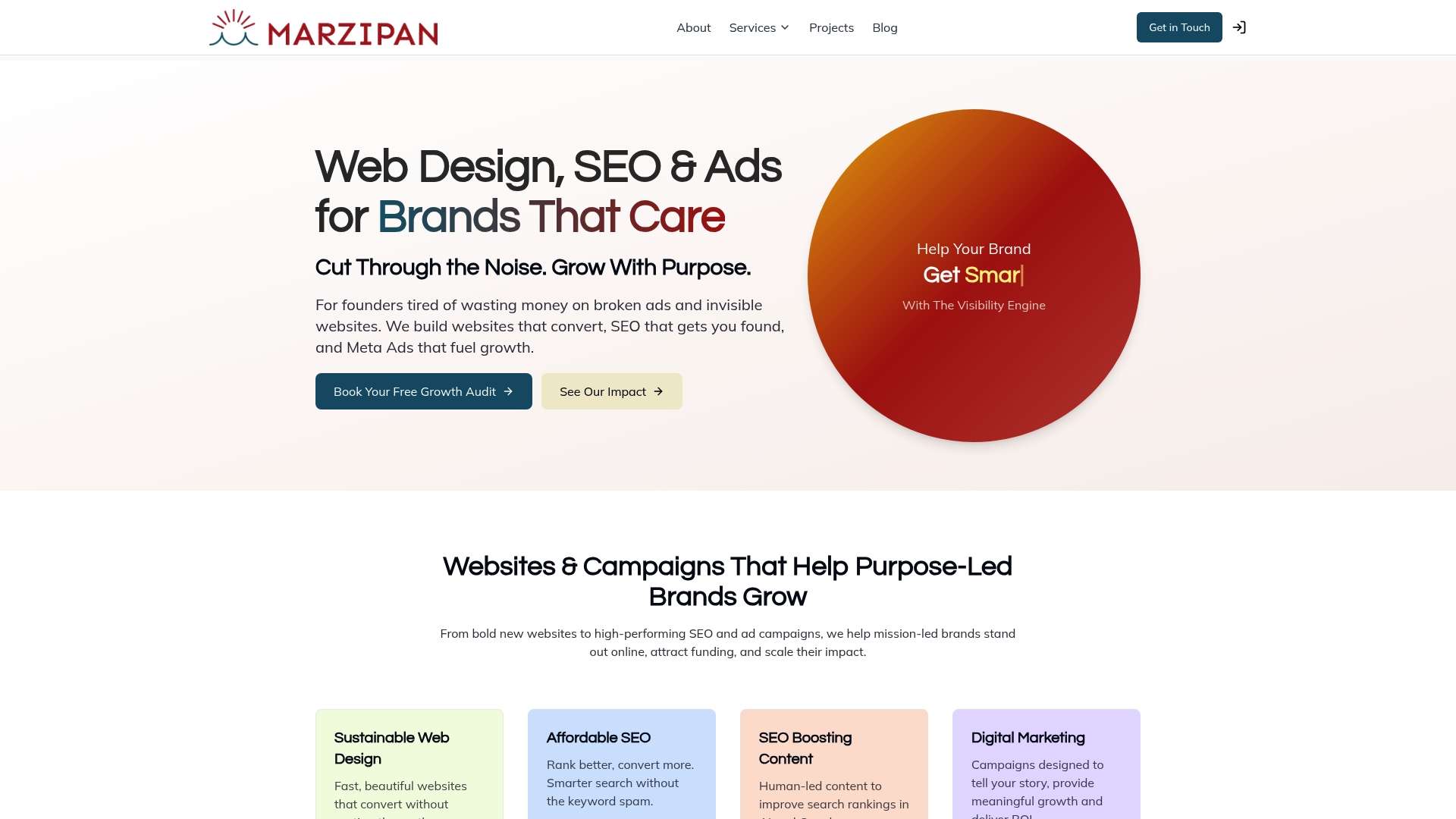
Organisations that want their sites to hold up under scrutiny, attract the right visitors, and operate responsibly online are the ones Com is built to support.
FAQ
What are the most important features for a business website?
The key components for business websites include mobile-responsive design, clear navigation, fast load times, HTTPS security, and trust signals such as testimonials and client logos. Each feature should serve a defined business objective.
How many features does a business website need?
There is no fixed number. A focused set of well-implemented features consistently outperforms a long list of poorly executed ones. Prioritise features aligned to your business goals and audience needs.
Does website security affect SEO?
Yes. Sites without HTTPS are flagged as insecure by browsers and may rank lower in search results. Security layers must be comprehensive and regularly audited to protect both visitor trust and search visibility.
What is sustainable web design?
Sustainable web design balances site performance with reduced ecological impact. It favours clean code, efficient page structures, and minimal resource use. Sustainable design principles align particularly well with high-trust organisational values.
How often should a business website be audited?
Security, performance, and accessibility should each be reviewed at least annually, with security checks conducted quarterly. Sites that are not regularly audited accumulate technical debt and compliance risk over time.


