

TL;DR:
- A web design studio creates custom websites and digital strategies tailored to nonprofit organizations’ goals. They focus on accessibility, sustainability, and long-term support to ensure effective audience engagement and compliance. Proper preparation and clear communication help nonprofits maximize the value of their website projects.
A web design studio is a specialised team that delivers custom website creation, digital strategy, and ongoing technical support tailored to an organisation’s specific goals. For nonprofit organisations and community groups, the right studio does more than build pages. It creates an accessible, sustainable digital presence that connects with audiences, supports fundraising, and reflects the organisation’s values. This guide covers what to expect from a professional studio, how much projects typically cost, realistic timelines, and how to choose a partner that will serve your mission well.
What does a web design studio offer nonprofit organisations?
A professional web design studio provides far more than visual design. The work begins with a discovery and strategy phase, where the studio learns about your organisation’s goals, audiences, and existing digital assets. This phase shapes every decision that follows, from site architecture to content structure.
Core services typically include:
- Custom website design aligned with your brand identity and user experience principles
- Accessibility integration built to WCAG 2.1 AA standards, covering keyboard navigation, semantic HTML, and ARIA roles for complex interface components
- CMS setup and training so your team can manage content without technical support
- Donation and payment integration, event calendars, and CRM connections
- SEO-focused architecture to improve search visibility and audience reach
- Sustainable web design practices including clean code, optimised images, and green hosting choices
Studios that treat accessibility as integral to the build process, rather than a final checklist, deliver more reliable results at launch. This matters particularly for nonprofits, where donated themes and third-party widgets often introduce accessibility failures that go undetected until after publication.
Pro Tip: Ask any studio you are considering to show you how accessibility testing is embedded in their development workflow, not just listed as a deliverable at the end.

How much does a professional web design studio cost for nonprofits?
Custom nonprofit website builds typically range from $15,000 to $60,000, with annual hosting and maintenance adding $600 to $3,000 or more. That range reflects significant variation in scope, complexity, and the level of ongoing support included.
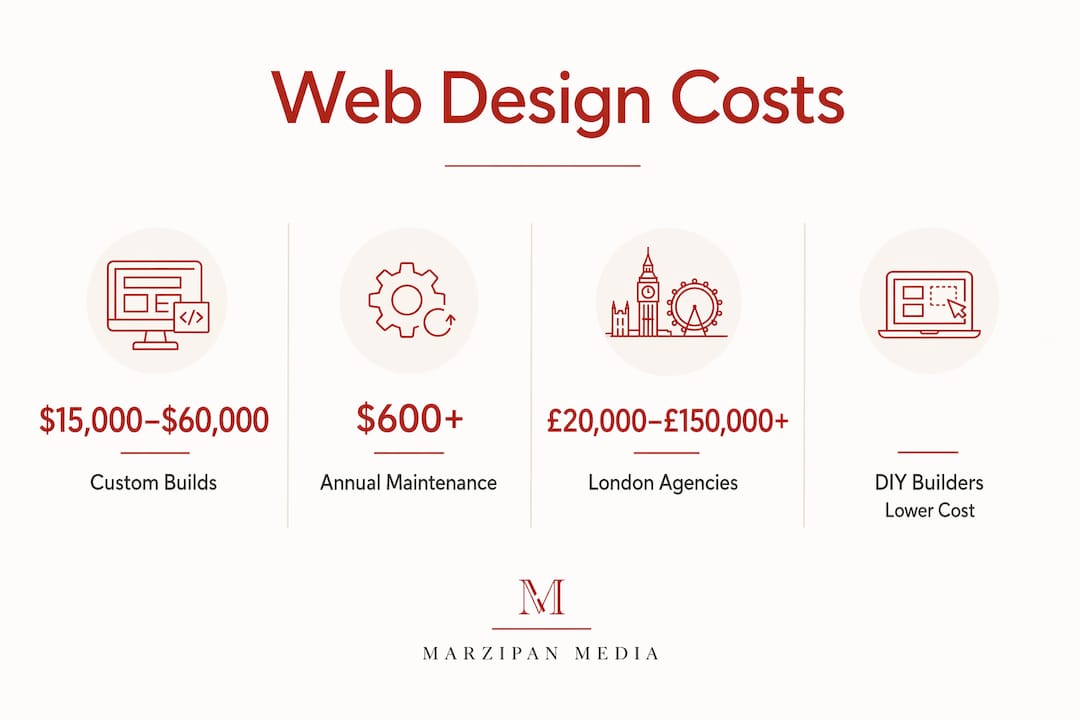
Bespoke projects at London-based agencies range from £20,000 to £150,000+ depending on features such as ecommerce, CRM integration, or custom application development. The figures differ by market, but the cost drivers are consistent across regions.
| Factor | Lower cost | Higher cost |
|---|---|---|
| Page count | 10–20 pages | 50+ pages |
| Functionality | Basic contact and donation form | CRM, ecommerce, custom apps |
| Accessibility scope | Standard WCAG audit | Full manual testing and PDF remediation |
| Ongoing support | None included | Retainer with maintenance and updates |
| Content migration | Client handles content | Studio migrates and reformats all content |
DIY website builders such as Squarespace or Wix reduce upfront cost but require significant internal time and rarely meet WCAG 2.1 AA standards without custom development. A studio-built site carries a higher initial investment. That investment typically returns value through better donation conversion rates, lower long-term maintenance burden, and reduced compliance risk.
What is the typical timeline for a nonprofit website project?
Nonprofit website redesigns typically take 4 to 16 weeks, with most projects landing in the 6 to 16 week range when all phases are included. The phases run in sequence: discovery and strategy, visual design, development and build, content migration, quality assurance, and launch.
A standard project timeline looks like this:
- Discovery and strategy (1–2 weeks): Stakeholder interviews, site audit, goal setting, and technical requirements
- Visual design (2–3 weeks): Wireframes, brand application, and design approval
- Development and build (3–6 weeks): CMS setup, custom coding, integrations, and accessibility implementation
- Content migration (1–2 weeks): Moving, reformatting, and optimising existing content
- Quality assurance and testing (1–2 weeks): Accessibility, performance, browser, and device testing
- Launch and handover (1 week): Go-live, training, and documentation
The most common cause of delays is not development complexity. Client feedback latency and slow content approval cycles stretch timelines far more than technical work. Organisations that prepare content and designate a single point of contact for approvals consistently finish projects faster.
Pro Tip: Set a fixed review window of 48–72 hours for each design approval stage. High-performing studios build this into their project contracts. If yours does not, ask for it.
How to choose the right web design studio for your organisation
Choosing a studio is a governance decision as much as a procurement one. The wrong choice creates compliance risk, accessibility debt, and ongoing maintenance costs that outweigh any initial savings.
When evaluating studios, look for these qualities:
- Explicit accessibility commitment: The studio should reference WCAG 2.1 AA compliance and describe how keyboard operability and semantic structure are tested during development, not after.
- Nonprofit or mission-sector experience: Ask for case studies from organisations with similar goals, audiences, and budget constraints.
- Transparent pricing and scope definitions: A reputable studio provides a clear scope of work with defined deliverables. Vague proposals lead to scope creep and unexpected costs.
- Sustainable design practices: Studios that use clean code and performance optimisation reduce your site’s environmental footprint and long-term hosting costs.
- Support for complex assets: Nonprofit annual reports and policy documents in PDF format require manual accessibility tagging. Ask whether this is included in scope or quoted separately.
- Long-term partnership model: A studio offering ongoing maintenance, iterative improvements, and training is more valuable than one that hands over a finished site and disappears.
Nonprofits frequently inherit accessibility problems by choosing platforms based on brand recognition or price alone without verifying accessibility documentation. Requesting vendor accessibility conformance reports before committing to a platform or studio reduces this risk considerably.
How to prepare your organisation for a successful studio project
Preparation on your side determines as much of the outcome as the studio’s skill. Content creation and approval cycles dominate redesign timelines more than technical development. Organisations that arrive at project kickoff with content ready move through build phases significantly faster.
Follow these steps before your project begins:
- Gather brand assets: Logos in vector format, brand colour codes, approved photography, and typography guidelines
- Compile key content: Mission statements, programme descriptions, team bios, testimonials, and impact data
- Define required functionality: List every feature you need, including donation forms, event calendars, membership portals, and CRM connections
- Run a preliminary accessibility audit: Free tools such as A11yScope or WAVE identify common failures on your current site and inform the brief
- Identify stakeholders and approval authority: Name one person with final sign-off power for each project phase
- Budget for PDF accessibility: Manual tagging of complex PDFs such as annual reports typically requires 2–3 hours per document using tools like Adobe Acrobat Pro. Factor this into your timeline and budget.
Pro Tip: Create a shared folder with all brand assets, content drafts, and reference materials before your first studio meeting. Studios that receive organised briefs allocate more of their time to design quality rather than chasing files.
For community organisations new to this process, the website design guide for community organisations from Marzipan provides a useful foundation before approaching studios.
Key takeaways
A professional web design studio delivers accessible, sustainable, and mission-aligned websites when nonprofits prepare thoroughly, choose partners with verified accessibility practices, and budget realistically for both build and ongoing maintenance.
| Point | Details |
|---|---|
| Cost range for custom builds | Professional nonprofit websites typically cost $15,000–$60,000, plus $600–$3,000+ annually for hosting and maintenance. |
| Timeline expectations | Most redesigns take 6–16 weeks; content readiness and approval speed matter more than development complexity. |
| Accessibility must be built in | Studios should integrate WCAG 2.1 AA testing throughout development, not as a final checklist item. |
| Prepare before kickoff | Gather brand assets, content, and functionality requirements before the project starts to avoid costly delays. |
| PDF accessibility is often overlooked | Manual tagging of nonprofit PDFs requires dedicated time and budget; automated tools only provide a baseline. |
What I have learned working with mission-driven organisations
The organisations that get the most from a web design partnership are rarely the ones with the largest budgets. They are the ones that arrive prepared, ask direct questions about accessibility and sustainability, and treat the studio as a long-term partner rather than a one-off supplier.
The most common mistake I see is treating the website as a finished product. A site launched without a maintenance plan degrades quickly. Plugins go out of date, accessibility standards evolve, and content grows stale. Nonprofits that budget for ongoing stewardship, even modestly, consistently outperform those that treat launch as the endpoint.
Scope management is the other area where projects quietly go wrong. Vague briefs produce vague proposals. When a studio cannot give you a clear answer about what is and is not included, that is a signal worth taking seriously. The organisations I have seen navigate this well are those that define their requirements in writing before approaching any studio, then hold that document as the reference point throughout the project.
Accessibility is not a compliance exercise. For community groups serving older adults, people with disabilities, or communities with lower digital literacy, an inaccessible website is a closed door. The studios worth working with understand this and build accordingly.
— Ben
How Com supports nonprofits with sustainable web design
Com, trading as Marzipan, works with purpose-driven organisations across Australia to build websites that perform without compromising on values. The focus is on accessible, sustainable builds that serve real audiences rather than chase metrics.
For nonprofits and community groups, Marzipan offers sustainable website rebuilds designed around accessibility, performance, and long-term maintainability. The service model is built for high-trust organisations that need a reliable digital partner, not a one-time vendor. If your organisation is planning a website project, a no-obligation conversation with the Marzipan team is a practical first step. Reach out via marzipan.com.au to discuss your goals and scope.
FAQ
What is a web design studio?
A web design studio is a specialised agency or team that provides custom website design, development, and digital strategy services. Studios differ from freelancers by offering integrated expertise across design, accessibility, performance, and content.
How much does a nonprofit website cost?
Professional custom builds for nonprofits typically cost $15,000–$60,000, with annual maintenance and hosting adding $600–$3,000 or more depending on complexity.
How long does a nonprofit website redesign take?
Most redesigns take 6–16 weeks, covering discovery, design, development, content migration, testing, and launch. Content readiness on the client side is the most common cause of delays.
What accessibility standards should a web design studio meet?
Studios should build to WCAG 2.1 AA as a minimum, covering keyboard navigation, semantic HTML, and ARIA roles. Accessibility testing should be integrated throughout development, not applied as a final check.
How do I evaluate a web design studio before committing?
Ask for nonprofit case studies, request a clear scope of work with defined deliverables, and confirm how accessibility and performance testing are embedded in the build process. Studios that cannot answer these questions clearly carry higher delivery risk.


