

TL;DR:
- Effective digital marketing in Australia now encompasses integrated strategies across SEO, paid media, content, email, and AI optimization, which outperform isolated tactics. Service-based businesses require tailored ad structures focusing on calls and bookings, with careful campaign data collection to ensure long-term profitability. As AI-driven search transforms visibility, structuring content for AI systems and choosing transparent agencies grounded in measurable results are essential for sustainable growth.
Most business owners assume internet marketing in Australia means running a few Google Ads or keeping a website updated. That assumption is understandable, but it leaves significant opportunity untouched. Effective digital marketing in Australia now spans organic search, paid media, content, email, social channels, and increasingly, optimisation for AI-driven search interfaces. This guide covers how those elements fit together, what works specifically for Australian service-based businesses, and how to make decisions about agencies and measurement without wasting time or budget.
Table of Contents
- Key takeaways
- Core internet marketing channels in Australia
- Marketing for service-based businesses in Australia
- AI and SEO in Australia: what is changing
- Choosing digital marketing agencies in Australia
- Measuring what matters in digital marketing
- My perspective on internet marketing in Australia
- How Com can support your digital marketing
- FAQ
Key takeaways
| Point | Details |
|---|---|
| Integration matters more than single tactics | Combining SEO, paid ads, content, and email produces more consistent results than any channel in isolation. |
| Service businesses need different ad structures | E-commerce templates fail service providers; campaigns should prioritise calls and bookings over product sales. |
| AI is changing search visibility | Optimising for AI Overviews and large language models is now part of responsible SEO practice in Australia. |
| Agency selection requires clear criteria | Project management, transparent reporting, and measurable goals are the baseline expectations from any reputable agency. |
| Measurement must come before adjustment | Changing campaigns too early undermines the data needed to make good decisions about long-term performance. |
Core internet marketing channels in Australia
Internet marketing in Australia covers a broader set of activities than most business owners initially expect. Understanding each channel and its role helps to allocate budget and effort with more precision.
The major channels currently in use across Australian businesses include:
- Organic search (SEO). Search engine optimisation drives discoverability through content quality, site structure, technical performance, and increasingly, signals that AI systems use to evaluate relevance. For organisations wanting long-term visibility, SEO remains the most cost-efficient channel over time.
- Paid advertising. Google Ads and social media advertising (Meta, LinkedIn, and others) allow businesses to reach specific audiences quickly. They are particularly effective for time-sensitive offers, geographic targeting, and generating early traction for new services.
- Content marketing. Articles, guides, case studies, and video content serve both SEO and audience trust. Consistent content creation signals credibility and helps businesses answer questions their prospective clients are already searching for.
- Email marketing. For client retention and re-engagement, email remains one of the highest-returning channels available. It works best when built on a segmented list and sent with genuine relevance rather than frequency.
- Social media. Platforms like LinkedIn, Instagram, and Facebook support relationship-building and community engagement. They are less direct conversion tools and more long-term trust and awareness channels for most service-based organisations.
The critical point is that these channels work best when they are connected. A business running paid ads without a coherent content strategy, or investing in SEO without tracking conversions, will see fragmented results. Integrated digital marketing services in Australia consistently outperform siloed approaches.
Marketing for service-based businesses in Australia
Service businesses — tradies, consultants, healthcare providers, legal professionals — face a specific challenge. Most paid advertising templates are built for e-commerce. They are designed to drive product purchases, not phone calls or appointment bookings.
Service businesses in Australia often err by using e-commerce marketing templates that fail to prioritise phone calls and appointments. The result is wasted ad spend and campaigns that attract clicks without generating actual enquiries.
Educator Daniel Dimsey, who teaches Google Ads to Australian business owners, has documented a more structured approach:
- Build tight ad groups. Each ad group should target a narrow cluster of highly relevant keywords. Broad targeting dilutes relevance and increases cost per lead.
- Set conversion goals accurately. Track calls, form completions, and booking confirmations. Not clicks, not impressions.
- Use Google Local Service Ads where applicable. For tradies, healthcare workers, and similar professionals, Local Service Ads appear above standard search results and display verified credentials, which builds immediate trust.
- Allow campaigns time to gather data. Premature changes to campaigns undermine the data-driven decision making that leads to long-term profitability. Early interference is one of the most common and costly mistakes.
- Review lead quality, not just lead volume. A campaign generating ten enquiries from poorly matched prospects performs worse than one generating three from well-qualified leads.
Pro Tip: If you are running Google Ads for a service business, check whether your campaigns have call extensions enabled and whether calls are being tracked as conversions. Most accounts that underperform have one or both of these missing.
Daniel Dimsey’s structured approach to campaign architecture delivers consistent results precisely because it starts with the business model rather than the advertising platform’s default settings.
AI and SEO in Australia: what is changing
The SEO landscape in Australia is undergoing a structural shift. Traditional optimisation focused on keyword rankings and backlinks. That still matters, but it is no longer sufficient on its own.

AI and large language model optimisation is now considered essential for gaining market share in organic search. The reason is that search behaviour is changing. Google’s AI Overviews now appear above standard results for a growing number of queries, and users are increasingly using AI tools directly to research products and services.
The practice of optimising for these systems is referred to as Generative Engine Optimisation (GEO). It involves structuring content so that AI systems can extract, summarise, and attribute it accurately. This is meaningfully different from keyword-stuffing or volume-based content production.
| Traditional SEO | Generative Engine Optimisation (GEO) |
|---|---|
| Targets keyword rankings | Targets AI Overviews and LLM citations |
| Prioritises search engine crawl signals | Prioritises clear, extractable content structure |
| Measures position and traffic | Measures visibility in AI-generated responses |
| Content volume as a signal | Content authority and specificity as signals |
| Technical site performance | Technical performance plus semantic clarity |
Practically, this means businesses need to review how their content is structured, whether their website’s SEO foundations are current, and whether their pages clearly communicate expertise on the topics they want to be found for.
Pro Tip: Review your most important pages and ask whether a language model could accurately summarise your core offer from the text alone. If the page relies heavily on images, sliders, or vague headings, it is likely underperforming in AI-driven search.
GEO is now a core component of modern Australian SEO strategy, not a speculative future concern.
Choosing digital marketing agencies in Australia
Selecting a digital marketing agency in Australia is a significant decision. The quality of available agencies varies considerably, and the wrong fit wastes both money and time.
Top-rated full-service digital agencies in Australia provide clear conversion goals and measurable lead generation frameworks from the first consultation. That is not a bonus feature. It is the baseline standard. If an agency’s initial conversation centres on brand awareness metrics or vanity statistics rather than your actual business outcomes, that is a meaningful signal about how they work.
Several criteria help distinguish reputable agencies from those that underdeliver:
- Transparent reporting. Measurable lead generation goals and clear reporting practices are requested by clients in every initial consultation with high-performing agencies. If an agency cannot explain clearly what they will measure and how, proceed carefully.
- Integrated service delivery. Full-service management of SEO, paid advertising, and web design correlates with higher client retention and more consistent outcomes. Agencies that handle only one channel often lack the context to make that channel perform well within the broader picture.
- Project management and communication. Australian agencies with 100% positive client feedback are consistently praised for responsiveness and project management quality. These are operational characteristics, not creative ones, and they directly affect your experience as a client.
- Alignment with organisational values. For community-based organisations, nonprofits, and purpose-driven businesses, working with an agency that understands ethical and sustainable practice is not a luxury. It affects how your brand is represented and what tactics are used on your behalf.
- Case studies and client reviews. Verified reviews on platforms like Clutch provide a more reliable signal than testimonials on an agency’s own website. Look for reviews that describe specific results and name the services involved.
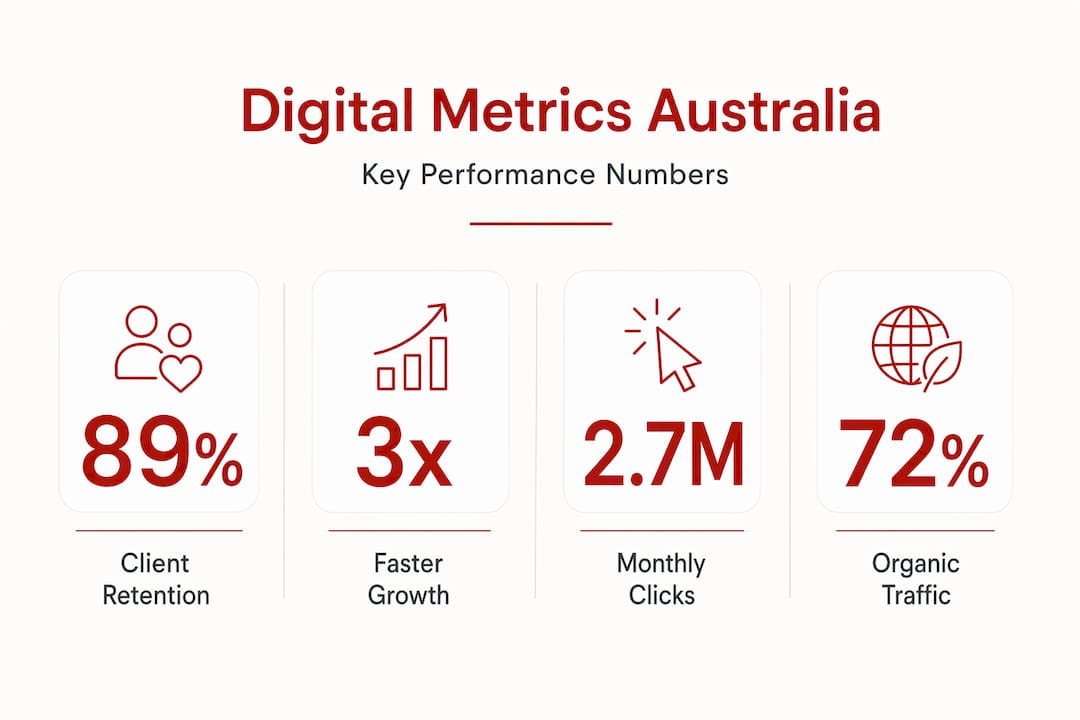
The 89% year-on-year client retention reported by top Australian agencies is a useful benchmark. If an agency cannot tell you about their retention rate or struggles to provide references, that warrants scrutiny.
Measuring what matters in digital marketing
Getting internet marketing to perform well over time depends on consistent measurement and disciplined iteration. Many businesses invest in marketing without establishing a clear baseline, which makes it impossible to judge whether anything is working.
The following areas are worth tracking from the outset:
- Conversion events. Define what counts as a conversion for your business. Phone calls, form submissions, booking completions, and email sign-ups are all distinct events that should be tracked separately and valued differently.
- Lead quality. Volume metrics alone do not tell you whether your campaigns are attracting the right people. Regular review of lead quality helps identify mismatches between targeting and messaging.
- Organic visibility trends. Track changes in search visibility over time, not just rankings for a fixed keyword list. This gives a more accurate picture of how SEO is performing.
- Return on ad spend. For paid campaigns, calculate the revenue or pipeline value generated per pound spent. This requires accurate conversion tracking and a clear attribution model.
- Engagement over time. For email and social channels, monitor whether engagement rates are holding steady, improving, or declining. Declining engagement usually signals a relevance problem rather than a frequency one.
Tools like Google Search Console, Google Analytics 4, and your advertising platforms provide this data without additional cost. The challenge is not access to tools but the discipline to review data regularly and act on what it shows. Adjusting a campaign based on two weeks of data produces worse outcomes than adjusting it after two months. Patience and consistency are not passive qualities in digital marketing. They are practical requirements.
My perspective on internet marketing in Australia
I have spent years working with organisations that have arrived at the same point: they have tried a few things online, seen mixed results, and concluded that digital marketing is either too expensive or too unpredictable to rely on. In most cases, the problem was not the budget or the channel. It was the absence of an integrated approach.
What I have found consistently is that businesses underestimate how much the structure of their campaigns and the quality of their website affect every other result. Ads driving traffic to a slow or unclear website produce poor returns regardless of targeting quality. SEO work done without attention to what happens after the click produces rankings that do not convert.
The arrival of AI in search is creating real uncertainty, and I understand the temptation to wait for the dust to settle. But the businesses that are building clear, well-structured, genuinely useful content now are the ones that will appear in AI Overviews and LLM responses over the next few years. This is not speculative. It follows the same pattern as every previous shift in search behaviour.
What I would caution against is treating AI tools as a shortcut to producing content at volume. The signal that AI-driven search rewards is expertise and clarity, not quantity. Organisations that prioritise accuracy, accessibility, and genuine usefulness in their content are better positioned than those producing more of the same.
The longer-term lesson from watching Australian digital marketing mature is that the fundamentals have not changed. Clear goals, honest measurement, and the patience to act on data rather than anxiety still produce better results than chasing the latest tactic.
— Ben
How Com can support your digital marketing
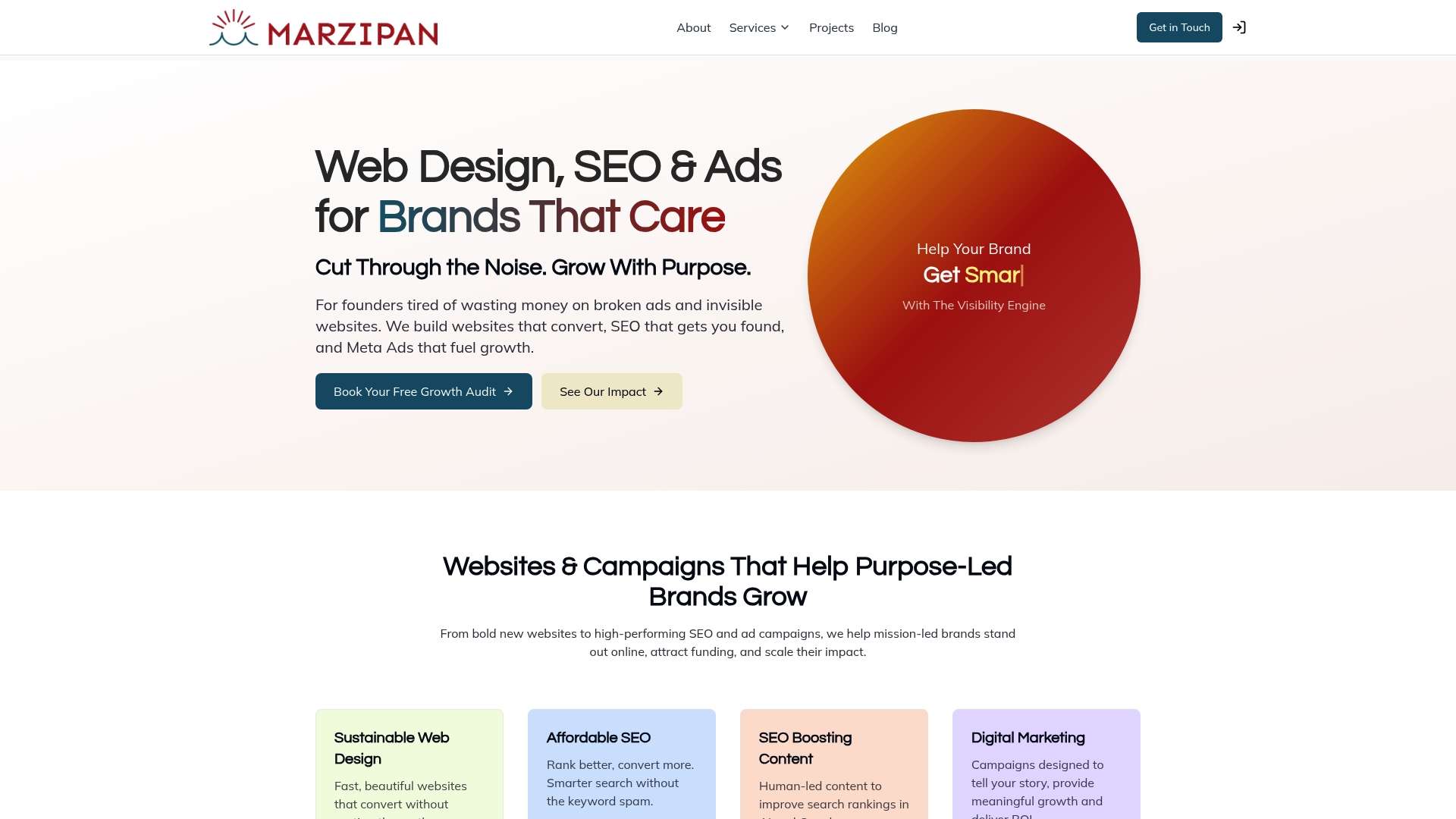
Com, trading as Marzipan, works with mission-led organisations in Australia that want to grow online without compromising their values. Based in Sydney, the team provides digital marketing services for high-trust organisations, combining ethical SEO, paid media, and sustainable web design into a coherent approach rather than a collection of disconnected services. For organisations navigating the shift to AI-driven search, Com also offers AI-informed SEO and sustainable website rebuilds that align technical performance with organisational purpose. If you are looking for a digital marketing company in Australia that focuses on measurable outcomes and long-term visibility rather than short-term noise, Com is worth a conversation.
FAQ
What does internet marketing in Australia actually involve?
Internet marketing in Australia covers SEO, paid advertising, content marketing, email, and social media, used in combination to generate leads, build visibility, and retain clients over time.
Why do service businesses need different ad structures to e-commerce businesses?
Service businesses need campaigns optimised for phone calls and bookings rather than purchases. Using standard e-commerce templates leads to wasted spend and low-quality enquiries.
What is Generative Engine Optimisation (GEO)?
GEO is the practice of structuring website content so that AI systems, including Google’s AI Overviews and large language models, can accurately extract and cite it in search responses.
How do I evaluate digital marketing agencies in Australia?
Look for agencies that set measurable conversion goals from the first meeting, offer transparent reporting, and can demonstrate client retention rates. Verified reviews on independent platforms provide reliable evidence of performance.
When should I adjust a digital marketing campaign?
Allow campaigns sufficient time to gather meaningful data before making changes. Adjusting too early, typically within the first few weeks, removes the data needed to make accurate decisions about what is and is not working.


